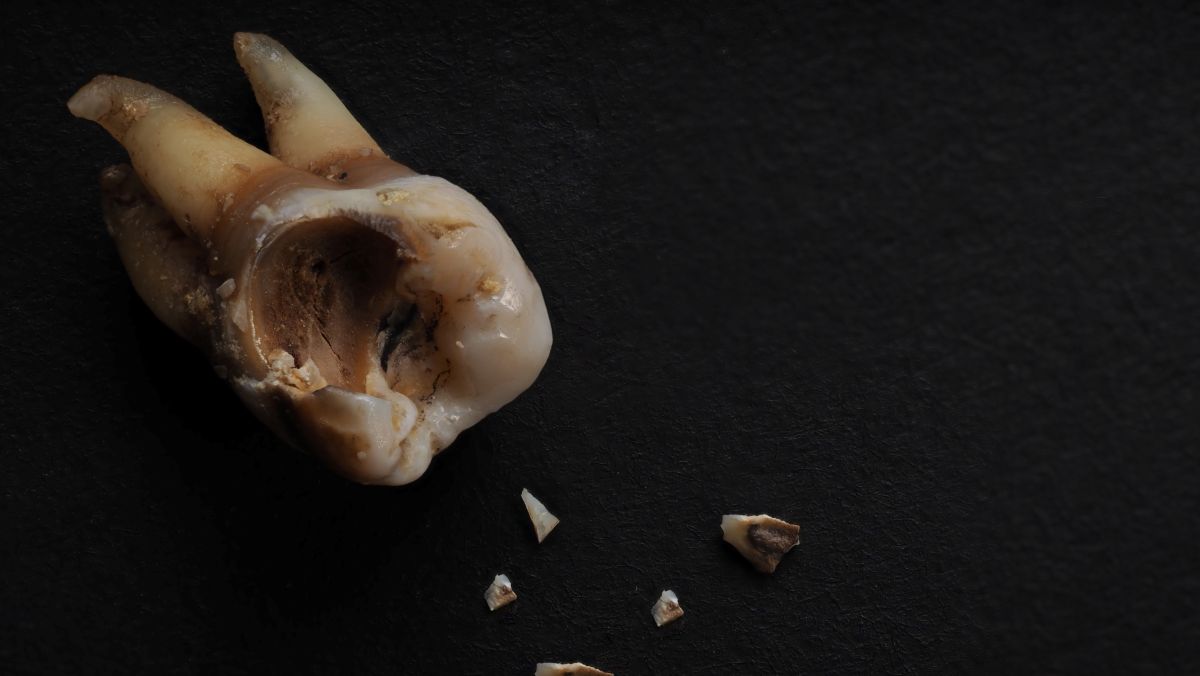
A cracked tooth can be sneaky. Some cracks cause sharp pain right away. Others come and go, making you wonder if it is “really” a problem. If you are noticing sensitivity when you bite, pain with hot or cold, or a tooth that suddenly feels different, you may be experiencing common cracked tooth symptoms.
The most important thing to know is this: cracks do not heal on their own. The earlier you have a cracked tooth evaluated, the better the chance you can protect the tooth with conservative treatment.
If you think you may have a cracked tooth, schedule an evaluation now at https://completehealth-dentistry.com/contact-us/ or call (850) 669-7544.
Common cracked tooth symptoms
Cracked teeth can look very different from person to person. Here are the most common signs:
- Pain when biting or chewing: especially when you release your bite
- Temperature sensitivity: sharp pain with cold drinks or hot foods
- Intermittent symptoms: pain that comes and goes, making it hard to pinpoint
- A rough or sharp edge: you may feel a “catch” with your tongue
- Swelling or gum tenderness: may suggest the crack is affecting the nerve or surrounding tissues
- Unexplained discomfort: a tooth that feels “off” even if you cannot see damage
Some cracks are visible. Many are not. That is why evaluation matters. A tooth can be cracked below the surface even when it looks fine in the mirror.
Cracked tooth pain: why it happens
Cracked tooth pain often happens because the crack allows pressure, temperature, and bacteria to irritate the inner layers of the tooth. When you bite down, the crack can flex slightly. That movement can trigger pain, especially if the crack is near the nerve.
The deeper the crack, the greater the risk of infection or nerve involvement. That is why waiting can turn a small crack into a bigger restorative problem.
Tooth cracked what to do right away
If you suspect a crack, here are safe steps you can take immediately:
- Avoid chewing on that side to prevent the crack from spreading
- Avoid hard or sticky foods like ice, nuts, hard candy, and caramels
- Use warm saltwater rinses if your gums feel irritated
- Take over the counter pain relief if appropriate for you, following label directions
- Call a dentist as soon as possible for evaluation
If you are in pain, call (850) 669-7544. If you prefer to schedule online, use https://completehealth-dentistry.com/contact-us/.
Cracked tooth vs cavity: how can you tell?
People often compare cracked tooth vs cavity because the symptoms can overlap. Both can cause sensitivity and discomfort. A few differences can help you understand what might be going on:
- Cavities often cause lingering sensitivity to sweets or cold and may be visible as a dark spot
- Cracks more commonly cause sharp pain when biting, especially on release
- Cracks can cause random “zings” even when you are not eating
That said, you cannot diagnose this at home. A dental exam is the safest way to identify the true cause and prevent the problem from progressing.
How to know if you have a cracked tooth
Semrush shows people frequently search how to know if you have a cracked tooth, and the honest answer is that it often takes a professional evaluation. Cracks can be microscopic or hidden under old fillings.
During an exam, your dentist may use:
- Focused evaluation of bite and pressure points
- Special tests for temperature and nerve response
- Magnification and lighting to visualize small fractures
- X rays or additional imaging when appropriate
Even if an X ray does not “show the crack,” it can reveal related signs such as inflammation around the root or changes that help guide the diagnosis.
What causes teeth to crack?
Cracks can happen for many reasons, including:
- Chewing hard foods like ice or hard candy
- Trauma from an accident or sports injury
- Grinding and clenching, especially at night
- Large or older fillings that weaken remaining tooth structure
- Sudden temperature changes, such as biting into something hot then cold
Grinding and clenching are particularly common and often unnoticed. Many people do it in their sleep and only realize it once they start experiencing wear, sensitivity, headaches, or fractures.
Cracked tooth treatment options
The best cracked tooth treatment depends on where the crack is, how deep it goes, and whether the nerve is affected. The goal is always to protect the tooth and prevent the crack from spreading.
1) Polishing or minor smoothing
If a tiny chip is only on the outer edge and does not affect deeper tooth structure, the fix may be simple. But even chips should be evaluated because they can signal bigger stress patterns.
2) Bonding or a filling
For smaller cracks or chipped areas, bonding or a tooth colored restoration may be used to protect the tooth and restore shape.
3) Onlay or crown for cracked teeth
If the crack involves a significant portion of the tooth, a crown or onlay can help hold the tooth together and prevent further fracture. This is often recommended when:
- The tooth hurts when biting
- There is a large existing filling
- The tooth structure is weakened
- The crack extends into areas that need reinforcement
Many patients search for cracked tooth crown because crowns are commonly used to stabilize teeth that are at risk of breaking.
4) Root canal treatment (when the nerve is involved)
If the crack has reached the nerve, infection or inflammation inside the tooth can occur. In those cases, root canal therapy may be needed before a crown is placed. This does not mean the tooth is “lost.” It means the tooth needs deeper support to stay healthy and functional.
5) Extraction (when the crack is severe)
Not every tooth can be saved. If the crack extends too far below the gumline or splits the tooth into separate pieces, extraction may be the safest option. If that happens, your dentist will discuss replacement options so you can chew comfortably and protect your bite.
Vertical root fracture symptoms
A less common but important type of crack is a vertical root fracture. People search vertical root fracture symptoms because it can look like a mysterious problem that keeps returning. Signs can include:
- Persistent tenderness near one tooth
- A recurring pimple like bump on the gum near the root
- Swelling that comes and goes
- Discomfort that does not fully resolve
These fractures often require a careful evaluation and may have a different treatment path than surface cracks.
Why cracked teeth are a general and restorative priority
Cracked teeth are one of the clearest examples of why general and restorative dentistry matters. When a crack is treated early, the solution can often be more conservative. When it is ignored, treatment tends to become more complex.
Restorative care is not just about fixing damage. It is about restoring stability so your mouth functions well and stays comfortable. That stability also supports whole body health, because chronic pain and inflammation can affect stress levels, sleep quality, and overall wellbeing.
Serving Shalimar and nearby Emerald Coast communities
Complete Health Dentistry of the Emerald Coast is located in Shalimar, and we regularly see patients from Destin, Fort Walton Beach, Niceville, Valparaiso, and Mary Esther. If you are dealing with cracked tooth symptoms, do not wait until it becomes an emergency.
Schedule: https://completehealth-dentistry.com/contact-us/
Call: (850) 669-7544
FAQs
Is a cracked tooth an emergency?
It can be. If you have swelling, severe pain, a broken piece of tooth, or pain that is worsening quickly, call (850) 669-7544. Even mild symptoms should be evaluated soon to prevent progression.
Can a cracked tooth heal on its own?
No. Tooth structure does not regenerate the way skin does. Cracks can worsen over time, especially with chewing and grinding.
Will I need a crown for a cracked tooth?
Not always. Some cracks can be treated with bonding or fillings, but crowns or onlays are often recommended when the tooth needs reinforcement to prevent further fracture.
What should I avoid if I think my tooth is cracked?
Avoid chewing on that side and avoid hard or sticky foods. Schedule an evaluation as soon as possible.
Schedule an evaluation for cracked tooth symptoms
If you are experiencing cracked tooth symptoms such as pain when biting, temperature sensitivity, or a tooth that suddenly feels different, the best next step is a professional exam. Early care can protect your tooth and reduce the chance of an emergency.
Schedule: https://completehealth-dentistry.com/contact-us/
Call: (850) 669-7544